Monday, 23 January 2017

Pouring Concrete vs Pouring Rain

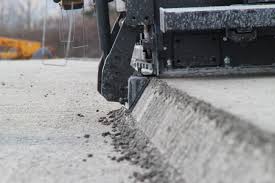
Unpredictable summer thunderstorms can wreak havoc on a concrete pour. Rainwater can cause a new concrete surface to become soft, which in turn decreases the abrasion resistance and strength of the concrete, while increasing the tendency for dusting and cracking to develop. The key to preventing damage to the concrete surface by a rainstorm is proper preparation and timing. Before a storm occurs, a protective enclosure can be built around the work site with wood and plastic sheeting. If you get caught without protection, once it starts raining, it’s best to wait, let the rain pass, and pull or push the surface water off the edge of the slab before completing finishing. Contractors should never work the rainwater into the freshly placed surface or broadcast dry cement on the wet surface in an attempt to soak up the water.

Just because it starts raining during or soon after a concrete pour, does not necessarily mean that your project is doomed. It all has to do with timing, and at what stage in the curing process the concrete is in. If the rain occurs when the concrete is fresh (about 2-4 hours after mixing), the surface should be protected from the rain. If the finishing process was recently completed, rainwater may not cause damage as long as it is not worked into the surface and the slab is left untouched. If the concrete has stiffened to the point where it is ready for grooving and grinding (typically 4-8 hours after mixing), damage due to rain is usually no longer a concern.

After a rainstorm, damage to the concrete should be assessed. A visual survey can be performed to note any obvious defects. A simple scratch test, using a screwdriver, can be performed to compare the relative surface scratch hardness of any areas in question to those slab sections known to be of good quality. A quantitative approach includes removing several core samples and checking them in a lab with an electronic microscope. (See our previous blog entry from February 17, 2012 about petrography)

If the surface quality of the concrete is found to be compromised, remedies are available. Isolated repairs can be made immediately after a storm by using the some of the same concrete that was used for the concrete placement itself. If small areas of a thin slab are damaged, it may be more economical to remove and replace full depth sections. If there are large areas in a thick slab with damage, a thin application of a repair mortar could be applied after the damaged concrete is removed.

Read this article from the main source at http://ift.tt/2jjZnlC.

The post Pouring Concrete vs Pouring Rain appeared first on ThermoConcrete.

Friday, 2 December 2016

Home Improvement Projects: Hiring a Contractor

A lot of people tend to make some mistakes when they are out trying to hire a good contractor. Usually people will hire someone that has plenty of advertisement. However, this is a good way of hiring someone that has no idea what they are doing, so it is important to do your research when you want to hire someone that knows what they are doing.

When searching for a contractor, you may want to talk to your friends and family if they can point you in the right direction. Your friends and family should be able to help you out without a doubt because chances are they hired some kind of contractor at least once in the past.

Another thing you will want to do is look for some of the local professionals in your areas and list down some that interest you so you will be able to compare them later.

Once you have a good list of contractors, you can figure out if they have a good reputation by using websites such as the better business bureau which can be a gold mine of useful information.

The next thing you will have to do when hiring a contractor is to ensure that they have the proper licenses and certifications to handle your home improvement project.

It is always a good idea to ask for a list of some references you can call up. You can ask these people if they were happy with the work that was done.

It is important to make sure you are able to put everything in writing when you hire one of these contractors to work for you. This means that if they provide you with a warranty or with an estimate, then you will need to have that put down in writing. If the company offers a guarantee, it is important to get that into writing as well. This will ensure that the company will keep its word when they tell you something, so always get everything in writing so you will have proof.

It is not that difficult to find an excellent contractor to handle your home improvement project. Just make sure you take your time and do your research so that you will know exactly who you are hiring and you will know exactly what to expect from their work. Because it pays to make the right decision the first time around.

The post Home Improvement Projects: Hiring a Contractor appeared first on ThermoConcrete.

Thursday, 1 December 2016

How Necessary Are Concrete In These Modern Times?

The world is ever changing and part of the change is the creation of different kinds of infrastructure projects that will make it possible to attain development. That is why, in any development, concrete is something that plays a vital role. It is in fact one that plays a centric role when it comes to the circular economy in general. As concrete is being used, you see schools, hospitals and different offices that are seemingly sprouting everywhere.

Image Credits: http://ift.tt/2gRuiSv

Thus, concrete should be seen as something that is bringing about developments to those who know how to maximize its use. It is one that is perhaps an integral aspect of what the world really needs. There are so many important benefits of concrete and that understanding such will give you a bigger overview of the benefits it carries.

The Role Of Cement And Concrete In The Circular Economy

The question is: what is our role in the circular economy, and what do we realistically have to offer?

  • Raw materials: Did you know that the raw materials that we use (limestone for cement and aggregates for concrete) are abundantly available in Europe? This is important, as we are not extracting and using scarce raw materials.

  • The cement manufacturing process: It probably comes as no surprise to hear that we use primarily coal and petcoke in our kilns. But what you may be less aware of is the fact that we are able to replace part of these traditional fuels with fuels and biomass derived from waste. Not only does this form of energy recovery reduce our dependence on fossil fuels, we are also able to recycle the ash back within our process. Our main energy sources are : petcoke, oil are the primary fuels with which we fire up our kilns; that, you know; what is probably new to you is that the cement industry in Europe takes a pioneering role in recovering energy and recycling material from waste in an operation we call “co-processing”

  • Concrete: Concrete is in fact made up of cement, water and aggregates (gravel, crushed stone, sand, recycled concrete). And guess what: concrete is 100% recyclable and can go back into concrete as a recycled aggregate or into other applications (e.g. road base). Another interesting fact is that concrete is such a durable material that structures can last for decades, or even centuries! We have all heard of the Channel Tunnel, but what you probably did not know is that the concrete used to build it is contractually guaranteed to last at least 120 years! Visit main article source…

Additionally, if you wish to benefit so much from concrete, then you need to know the practical uses of such in your home. As a homeowner, you can see that concrete can be used to make concrete countertops, and when you partner it with precision grout, and then it is certainly going to make you realize that you’ve made an ideal choice at the very first glance!

Can I Use Non-Shrink Precision Grout to Create Concrete Countertops?

NSPG and Concrete Countertops

This is part of the problem with using NSPG for countertops. With the oridnary applications that NSPG is intended for, usually not much of the grout’s surface area is exposed to the air, so drying occurs slowly. With a countertop made out of NSPG, there is a huge amount of surface that can dry out. Thus any early expansion that would normally counteract the inevitable shrinkage is overwhelmed by the excessive amounts of shrinkage caused by rapid and continuous drying.

Countertops are large, flat beams with large amounts of surface area exposed to the air, so drying becomes a serious issue. As concrete dries and loses moisture, the capillary tension created by the water in the fine pores causes volumetric shrinkage. It is the loss of internal water that causes the shrinkage. The longer the concrete is allowed to dry, the more shrinkage will occur. For larger pieces of concrete, drying shrinkage can continue for years. Even very thin pieces of concrete will continue to shrink over time, as will be seen below. View more details here: http://ift.tt/2gRsZTI.

So remember that, concrete will give any infrastructure project that you are making the durability as well as longevity that it must carry with it. Thus, you can certainly reflect on the value as well as that of the importance of the product in whatever it is that you are using it for.

Image Credits: http://ift.tt/2gRuiSv.

The post How Necessary Are Concrete In These Modern Times? appeared first on ThermoConcrete.

Thursday, 24 November 2016

What You Can Do With Roller Compacted Concrete?

To those still unfamiliar with construction terms, there is an innovation being implemented—-known as roller compacted concrete; in  a way, it is a special blend of concrete as opposed to the traditional one. Essentially, this kind of concrete is a mixture of fly ash, water, sand and common additives. When all  these things are mixed up then you will get something that is drier in form and one that is essentially without any slump in it, which is great for use in any concrete works.

Image Credits: http://ift.tt/2gmkAL6

The use of the roller compacted concrete is somehow similar to that of paving; such that the material is delivered through the use of dump truck or that of conveyors. Vibratory rollers are also being set in place in order that the material becomes even more compacted. Thus, there are a lot of construction projects that will certainly benefit when proper use of the roller compacted concrete is utilized.

Thin RCC Pavements In Use

The question of how thin roller compacted concrete (RCC) pavement can be placed is being asked more frequently.  As residential and commercial applications are finding a fit with RCC, thinner pavement sections are being constructed.  Traditionally, RCC pavements have been installed at large industrial facilities (e.g. sea ports, tank hardstands, logging yards) requiring pavement sections as thick as 18 to 22 inches, constructed with multi-lift placement techniques.  However, RCC’s popularity is growing fastest in applications that require thinner sections.

The Portland Cement Association’s (PCA’s) RCC Pave software encourages a 4-inch minimum pavement thickness, for constructability reasons.  Many projects have employed 4 and 5 inch thin RCC pavement throughout the U.S., including:

  • Plant Vogtle; Waynesboro, GA (2011); parking – 4 inches
  • Volkswagen Auto Manufacturing Plant; Chattanooga, TN (2010); parking – 4 inches
  • Jack Daniel’s Distillery; Lynchburg, TN (2011); parking – 5 inches
  • Honda Auto Manufacturing Plant; Lincoln, AL (2000 & 2004); access roads – 5 inches
  • A Retail Lumber Store; Ft. Payne, TN (1998); lumber storage yard – 5 inches
  • Saturn Auto Manufacturing Plant; Spring Hill, TN (1989); parking – 5 inches

Why choose RCC?  Because RCC can be designed and placed for lower cost than an equivalent asphalt/flexible pavement on many projects–and provide a higher level of performance.  CCT can help road agencies and engineers determine if RCC is the right choice for a project.  Give us a call. Read more…

On the immediate uses of concrete, it is important for you to see that there are concrete tiles which you can install in your homes to make it more dashing than it was once. This will help enliven the interior aspect of your home, and in a way will make it look more livable than it should.

Granada Tile Fez Cement Tile In The Kitchen of Emma Magazine’s Editor

Many of our most popular concrete tile designs, like our Fez encaustic tile, our Cluny concrete tile and our Serengeti cement tile are in stock and ready to ship out to you immediately! Or you can have any of our cement tile designs custom colored for your tile project, like the Badajoz cement tile above, which has been custom colored in black and white. The qualities that make Granada Tile’s cement tiles the choice of award-winning coffee shops and hot restaurants around the country — along with their beautiful designs and vivid colors, our concrete tile is long lasting, easy care and low maintenance — are the same ones make it perfect for your home tile project, whether used as patio tile, porch tile, kitchen floor tile, kitchen backsplash tile, bathroom tile, shower tile or laundry room tile.  Start by visiting our cement tile shop to peruse our large selection of in-stock handmade master-crafted cement tiles and call us today at 213-788-4238 to discuss which of our encaustic tile designs would be perfect for your home or restaurant project.

We’re always curious to see what other tile designers are doing, especially when they are moving in a similar direction to what we’ve been exploring.  Lately, in a desire to explore more way to create cement tile designs, we been working to create embossed cement tiles which we will be introducing shortly.  So we were intrigued when we spotted the cement tile designs of British designer Lindsey Lang. Borrowing from the archives of the London Underground, she created these patterns in embossed cement.  It seems the old saying is true: great minds think alike! Read more info on this site: http://ift.tt/2ftxBho.

It is certainly an important point to understand that there are so many benefits that you can derive from concrete. And seeing that you can even beautify your interior with the use of such will definitely entice you to making the most of what it can offer. There are definitely a lot of great things that will come your way with all these concrete when properly chosen.

The post What You Can Do With Roller Compacted Concrete? appeared first on ThermoConcrete.

Thursday, 17 November 2016

Common Facts You Need To Be Familiar with When It Comes To Concrete

If you want to be guided when it comes to the construction works that you are undertaking, it pays that you are familiar with some important words. Understanding the basic definitions about concrete and its uses will make you see a much bigger picture of it. You will therefore enable yourself  to utilize your understanding so that you will get an in depth overview of when it comes to construction works.

Image Credits: http://ift.tt/2g1HAPq

When you are well informed with all construction details, then it will be much easier for you to get an informed decision in any matters that will come your way in the course of the construction process. You will essentially get the upper hand in whatever it is that you are going to decide along the way.

Some Basic Definitions Used In Cement And Concrete

A few useful basic definitions follow, since the meanings of the words ‘cement’ and ‘concrete’ are rather blurred in general use.

Portland Cement: Material made by heating a mixture of limestone and clay in a kiln at about 1450 C, then grinding to a fine powder with a small addition of gypsum. Portland Cement, the main subject of this site, is the most common type of cement – ‘basic cement’, if you like. In particular, ordinary Portland cement is the normal, grey, cement with which most people are familiar. Other types of Portland cement include White Portland Cement and Sulfate Resisting Portland Cement (SRPC).

Clinker: Portland cement is made by grinding clinker and a little added gypsum. Clinker is a nodular material before it is ground up. The nodules can be anything from 1mm to 25mm or more in diameter.

Cement: Usually taken to mean Portland Cement, but could mean any other type of cement, depending on the context.

Aggregate: Cobbles, pebbles, gravel, sand and silt – the ‘rock’ component of all particle sizes in concrete.

Concrete: Synthetic rock made using cement (usually, but not necessarily, Portland cement) mixed with aggregate and water. Read more!

So how does the concrete being extracted so that it can be used in any construction works? That is really an interesting question that needs to be put to rest. Mining concrete is an important aspect that needs to be tackled to fully get a good look at its astonishing advantage.

Sand Extraction For Concrete

And creating all the concrete relies on mining sand and gravel, collectively known as aggregates. Aggregates are extracted from the earth at an astonishing rate – exceeding 40 billion tons. A year. In the US, for example, the market for mined sand has been growing at 10% annually since 2008, meaning it is a billion-dollar business annually.
Now, although the deserts are awash in sand, it is considered unusuable for making concrete. This happens because it is subject to so much wind erosion, causing the grains to become too round and blow away. (Which is why Dubai, located in the desert, ships in sand for its beaches from Australia.) Desert sand also fails to bind well. Instead, we source the bulk of our sand from land quarries and riverbeds, so much so, that we’re running out and have turned to the coasts. “River and marine aggregates remain the main sources for building and land reclamation,” notes a recent report by the United Nation Environment Programme (UNEP) on the dwindling sand situation. Details explained here: http://ift.tt/2fK8Uio.

These few facts will give you a deeper perspective to what concrete is really all about, it will encourage you to get a whole picture of how it is mined and, in the process, being utilized. There are so many great things that you will learn from the use of concrete which you can apply during the construction works in your property.

The post Common Facts You Need To Be Familiar with When It Comes To Concrete appeared first on ThermoConcrete.

Thursday, 10 November 2016

What Is Concrete Recommended For?

There are definitely a lot of uses that concrete has for anyone in today’s world. In fact, concrete plays a major role in development in such a way that it is a material that is second most consumed in the world. You will see that it is heavily used in major economies to propel them to development. That is why, there are a lot of infrastructure projects such as schools, dams, roads and what not that are being constructed, thanks entirely to concrete.

Image Credits: https://encrypted-tbn2.gstatic.com/images?q=tbn:ANd9GcSlE8hwY3X16nzwKsvCbruJftDtHWdjLLU8aDGU63AN6GF6w2p0-Q

At the context of your very own home, you can make use of concrete in repairing any cracks or breaks that you see in your property. Any broken pieces will surely be repaired in no time when utilization of concrete is further maximized.

Cement Cove

If you have any broken pieces of concrete, or you need to repair some major mortar joints, this is the stuff you need. And you don’t need to mix this with water. It comes pre-mixed. Keep that in mind as other repair compounds may require that you actually still mix them with water.

The only time I wouldn’t recommend this, is if you need to use it where you might be driving your vehicle. It’s not recommend for that. Small cracks in your driveway yes, but for major driveway repairs, you’ll need something else.

Which Product is Recommended?

The particle mix I recommend is the Dap 32611 Phenopatch Pre-Mixed Patch.

This particular compound is very high strength and used primarily on cracks or breaks in your concrete.

You can purchase it in several different packs, however each jug carries 1 qt of compound.

The convenience is great.

Instead of having to mix your own cement with a mixer, these pre-mixed products are super convenient.

They should not completely replace the need for standard concrete, however for patching and small repairs, they’re definitely helpful. Read more facts here…

It would be essential that you find experts that will help you in the testing and evaluation processes of the concrete that you have with you, so that you will be able to get the high quality ones. You will see that the best concrete are those that will make you enjoy its functionality for a long period of time. Thus, carefully selecting which is the best, as aided by an expert, will put you at an advantageous position.

Concrete Expert Witness: Concrete Repair and Testing Evaluations

Building Forensics International utilizes consultants from various fields of expertise. The video is from one the consultants we refer when waterproofing issues arise involving concrete/cement issues.  American Restore and it’s founder Jim Andrews has vast experience when it comes to tipping floors and all types of concrete warehouse slabs of any kind.

Waterproofing and repairs of concrete slabs requires expertise and experience to get the job done correctly.  This videos shares information on many aspects of concrete repair and testing of concrete slabs.

BFI hopes you take the time to watch this informative video.  If you are in need of a concrete expert for litigation, investigation or concrete expert witness assignments please consider calling Building Forensics International.  More to read here: http://www.buildingforensicsintl.com/single-post/2016/06/13/Concrete-Expert-Witness-Concrete-Repair-and-Testing-Evaluations.

All these details will guide you in the way that you choose the kind of concrete you must make use of in your property or any construction works for that matter. Having an understanding about all these details will lead you to the right path in choosing what kind of concrete suitable for any construction projects you have at the end of the day.

Image Credits: https://encrypted-tbn2.gstatic.com/images?q=tbn:ANd9GcSlE8hwY3X16nzwKsvCbruJftDtHWdjLLU8aDGU63AN6GF6w2p0-Q.

The post What Is Concrete Recommended For? appeared first on ThermoConcrete.

Thursday, 3 November 2016

Equipments That Aid In the Use Of Concrete

Concrete is a product that is seemingly used everywhere. It is a product that is heavily consumed by different advance and advancing economies as it aids in development and progress. With the use of concrete, there are so many infrastructure projects that you can come up with. With that in mind, you will therefore see a greater picture on how you can put to use concrete so that it will give you so much advantage.

Image Credits: http://ift.tt/2ejpqne

Apart from the use of concrete, you see the fact that different equipment must be utilized in order that the concrete will be put to good use. Thus, choosing the right kind of equipment will certainly bring so many advantages in the event of your ongoing construction.

Get The Facts On Cyclonaire’s Cement & Concrete Solutions

To provide you with a better understanding of how our solutions can fit your application, Cyclonaire has created a Product Guide for Cement & Concrete Applications.

The guide provides an overview of our top quality cement industry solutions, including:

  • Blower PackagesCyclonaire’s custom-built intermediate pressure blower packages power both vacuum loading and pressure conveying applications.
  • Bag Dump StationsOur bag dump stations feature self-contained fan and self-cleaning pulse jet-style filtration dust traps for recycling.
  • C&C Dust Reclaim SystemThe automated C&C Dust Reclaim System preserves air quality and conserves valuable material by capturing dust from silo-filling operations and automatically returning it directly to the source silo.

From railcar and silo conveying to cement blending — to convey systems and portable conveying systems — Cyclonaire has a solution for your cement and concrete application.  Read more here…

At home, you can benefit so much from the innovation that has been infused in the concrete of today. Such that there are DIY projects that you can come up with, so that you can fully maximize the concrete and put it to good use in beautifying your interiors per se. Concrete now is being utilize in broad spectrum, and has brought benefits to many homeowners.

Concrete Countertop DIY

When you come to a right angle (like where the backsplash meets the counter) it helps to use a wide putty knife and pull the wet cement up from the countertop on the backsplash part and towards yourself away from the wall on the countertop. Pulling the cement in the opposite directions helps give the corner a cleaner look.

The hardest part of this whole job was the rounded angle on the top of the backsplash. I had to use the small putty knife to put small amounts of wet concrete on the rounded edge, smooth it out the best I could, but honestly, I shaped most of that area during sanding. If you’re ever in doubt, put too much concrete on-you can always sand off excess later, but you can’t add more without mixing another batch. Read more here: http://ift.tt/1nx6Qc6.

These things will essentially guide you to fully make sure that as you use concrete, it will not only improve the aesthetics of your house, but more so of its functionality. The concrete that you are seeing are being further researched and innovated so that more and more homeowners will get to enjoy the many kinds of benefits that it has for everyone.

Image Credits: http://ift.tt/2ejpqne.

The post Equipments That Aid In the Use Of Concrete appeared first on ThermoConcrete.